
Audio is part of our daily routine in an almost invisible way: we listen to it when we wake up, while we work, in the car, or before going to sleep. However, what was once solely associated with radio has evolved into a much broader and more dynamic ecosystem.
Today, audio in Spain combines different formats such as traditional radio, streaming, and podcasts, adapting to the habits and moments of each user. This shift has not only transformed how content is consumed but also how brands and media outlets understand this channel.
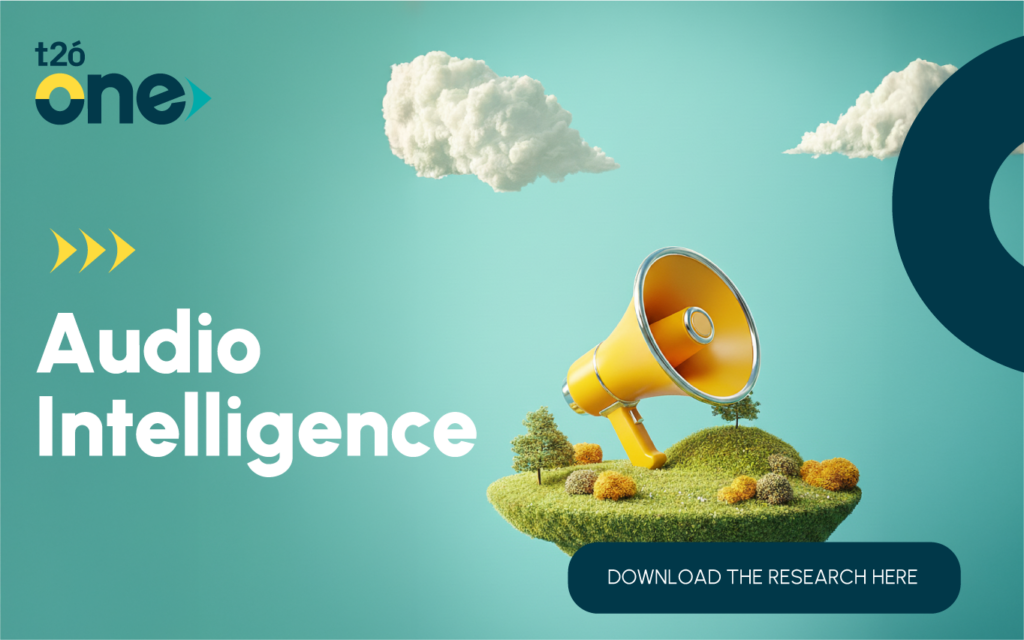
Against this backdrop, t2ó ONE has conducted research to analyze how this ecosystem is structured and the role each format plays in Spain’s current audio consumption.
Audio currently reaches 28.7 million listeners in Spain, confirming its immense relevance within the media landscape. Within this ecosystem, three main formats stand out:
- Traditional Radio: 23.4 million listeners
- Music Streaming: 14.4 million listeners
- Podcasts: 2.5 million listeners
This change in habits is fundamental to understanding the new audio ecosystem. Radio dominates the mornings, streaming is distributed throughout the day, and podcasts find their niche in quieter moments, such as the evening. In this way, audio formats do not compete; instead, they complement each other to accompany the user through their entire daily routine.
Towards an «Audio 360» Strategy
In this context, the concept of Audio 360 becomes especially important. This approach proposes a new way of planning audio: rather than choosing between formats, it integrates them strategically.
- Radio acts as the reach generator.
- Streaming expands coverage throughout the day.
- Podcasts reinforce attention and user connection.
This strategy allows brands to reach more people more efficiently, adapting to different consumption moments and avoiding audience saturation. Ultimately, audio is consolidating as an essential tool for connecting with audiences in an environment where capturing attention is more difficult than ever.